
Introduction to Eggplant Caponata Recipe
When it comes to preparing homemade meals, eggplant caponata is an absolute winner. This vibrant Sicilian dish is not just a salad or relish; it’s a medley of flavors that harmoniously blend sweet, sour, and salty notes. The foundational ingredient, eggplant, brings a wonderful texture and an earthy taste that complements the other ingredients beautifully.
Why is eggplant caponata a go-to for homemade meals? For one, it’s incredibly versatile. You can serve it warm as a side dish, chill it for an appetizer, or even use it as a topping for your favorite protein. Plus, it keeps getting better with time—the flavors meld and deepen, making it perfect for meal prep. You can store it in a mason jar in the fridge and enjoy it over the next few days.
What’s more, the ingredients are simple and often found in your pantry. This makes the eggplant caponata recipe an ideal choice for busy weeknights or casual gatherings. With a little effort, you’ll have a dish that impresses friends and family alike. So, let’s dive into making this delicious Mediterranean delight!
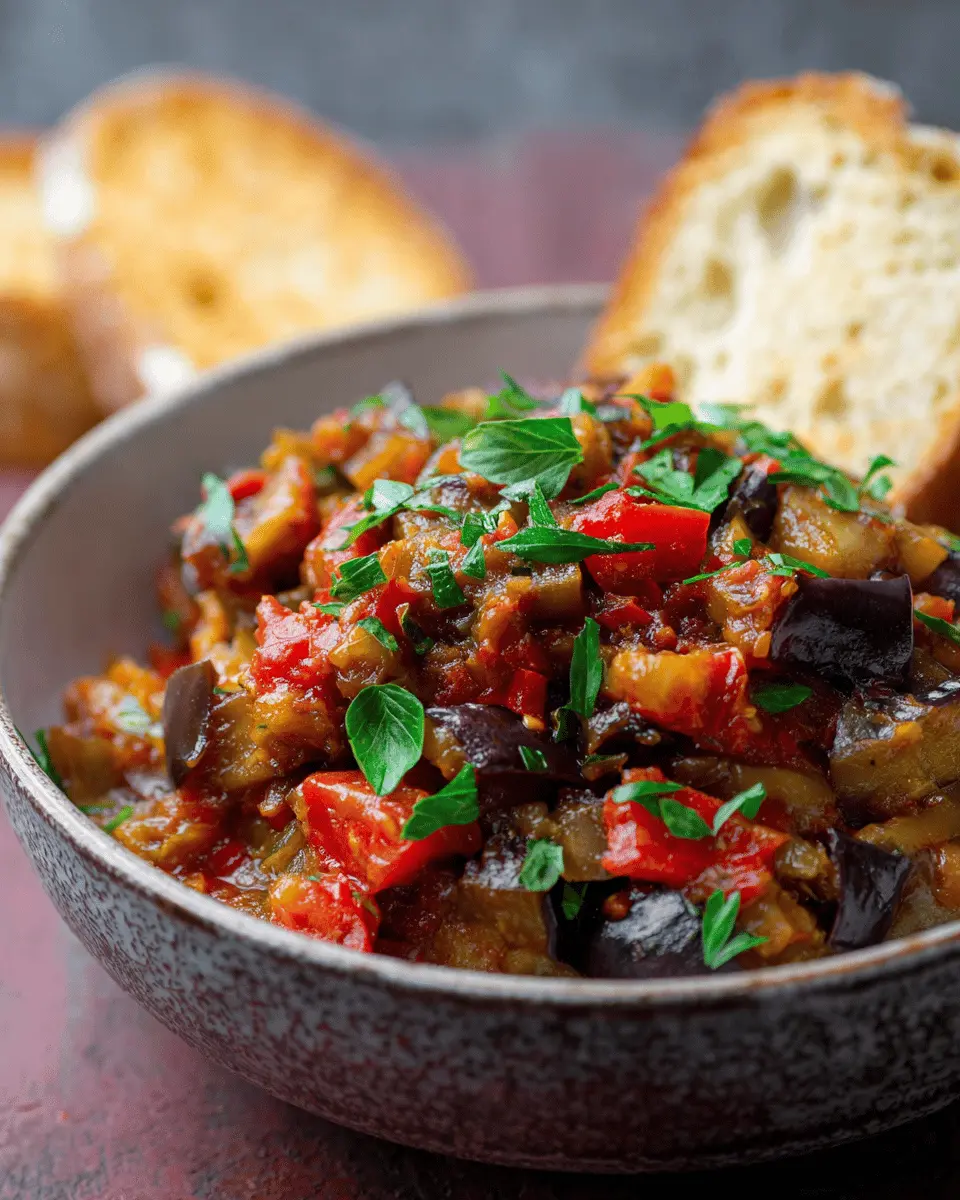
Ingredients for Eggplant Caponata
Essential ingredients for a flavorful caponata
When diving into this eggplant caponata recipe, it's crucial to gather the right essentials that make this dish shine. Here’s what you need:
- 1 large eggplant (about 1 ¼ lb), cut into 1-inch cubes
- Kosher salt to season
- Extra virgin olive oil (I recommend a high-quality variety such as Private Reserve)
- 1 yellow onion, chopped
- 1 red bell pepper, cored and chopped
- 2 small celery stalks, thinly sliced
- 1 cup crushed tomatoes for a rich base
- 2 tablespoon capers for brininess
- ¼ cup pitted green olives, roughly chopped
- ¼ cup raisins for a subtle sweetness
- ¼ cup red wine vinegar to balance flavors
- 2 tablespoon chopped fresh parsley and mint for garnish
These ingredients lay the foundation for your caponata, resulting in a beautiful balance of flavors and textures.
Optional ingredients for personalization
To make this dish your own, consider incorporating some optional ingredients:
- Pine nuts or almonds for added crunch
- Carrots or zucchini, diced, for extra veggies
- Crushed red pepper flakes if you like a kick
- Honey for more sweetness—adjust to your preference
Experimenting with these additions allows you to put a personal twist on this classic Italian dish. What will you add to make it uniquely yours?
Preparing Eggplant Caponata
If you’re ready to dive into the delightful world of Sicilian cuisine, you’re going to love making this eggplant caponata recipe. This sweet-and-sour dish is not only packed with flavor but also embodies the essence of Mediterranean cooking. Let’s break it down step by step to create a tasty and vibrant dish that’s best enjoyed the next day.
Prepping the eggplant
First things first: let's prep that eggplant! Start by cutting one large eggplant (around 1 ¼ lbs) into 1-inch cubes. This size ensures even cooking and the perfect texture. Before cooking, it’s a good idea to season the cubes with kosher salt. This step helps to draw out any bitterness and moisture from the eggplant. If you have a bit of extra time, let the salted eggplant sit in a colander for about 20-30 minutes while you prepare the other ingredients. Don’t forget to pat it dry before moving on!
Roasting the eggplant
Now it’s time to get that eggplant nice and golden. Preheat your oven to 400 degrees F. Spread the seasoned eggplant cubes on a sheet pan in a single layer and drizzle generously with extra virgin olive oil—about three tablespoons should do the trick. Toss to coat and roast for approximately 25 to 30 minutes, or until they’re browned and delicious. This roasting process adds a huge depth of flavor to the caponata, making it irresistibly good.
Sautéing other vegetables
While the eggplant is roasting, let’s focus on the other veggies. In a large skillet, heat two tablespoons of extra virgin olive oil over medium heat. Add in one chopped yellow onion, one chopped red bell pepper, and two thinly sliced celery stalks. Season with a pinch of kosher salt and black pepper. Sauté these vegetables for about 5 to 7 minutes, stirring regularly until they soften. This mix will bring sweetness and a nice crunch to your eggplant caponata recipe.
Combining flavors in the skillet
Once the vegetables are tender, it’s time for the tangy goodness. Add one cup of crushed tomatoes, two tablespoons of capers, ¼ cup of roughly chopped green olives, and ¼ cup of raisins to the skillet. For that perfect balance of flavors, stir in two teaspoons of honey, a bay leaf, and some crushed red pepper flakes (between ¼ teaspoon to ½ tsp, depending on your taste for spice). Pour in some red wine vinegar and give it a good stir. Simmer on medium-low heat for about 10 minutes to let those flavors meld beautifully.
Finishing touches with herbs
Finally, let’s bring it all together! Stir in the roasted eggplant and cook for an additional 2 to 3 minutes. The eggplant will absorb all those delicious flavors from the sauce. Just before serving, toss in a couple of tablespoons of freshly chopped parsley and mint for brightness.
Let your eggplant caponata sit and embrace its flavors for at least an hour at room temperature, or better yet, store it overnight in the fridge. This dish is perfect when paired with toasted ciabatta bread and is a fantastic addition to any gathering!
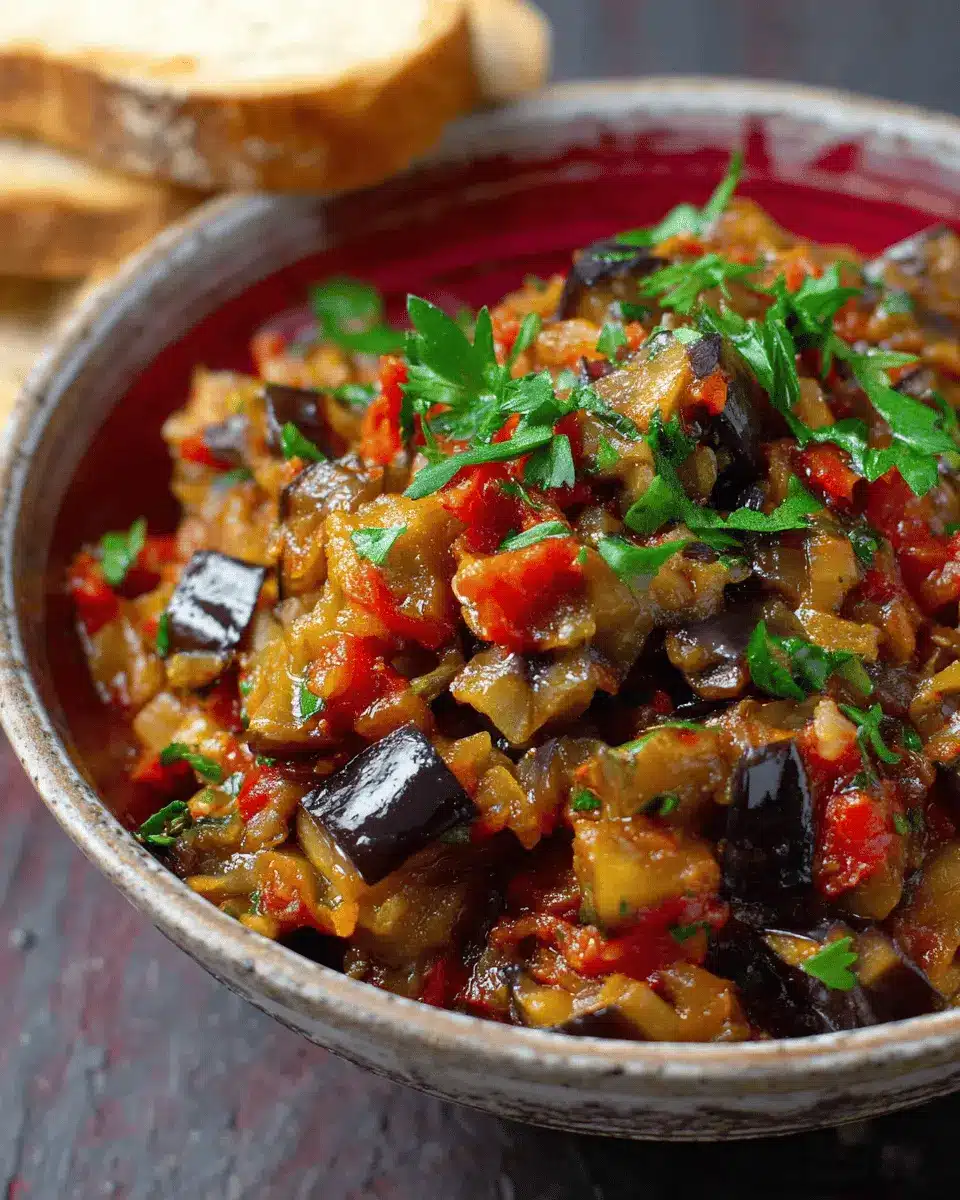
Variations on Eggplant Caponata
Mediterranean-inspired versions of caponata
While the classic eggplant caponata recipe is a true delight, don't hesitate to get creative! For a Mediterranean twist, try adding sun-dried tomatoes or artichoke hearts. You could even swap in roasted red peppers for a smoky flavor. Incorporating different herbs like basil or dill can elevate the dish and add that fresh garden essence. Consider experimenting with feta cheese for a creamy touch that beautifully balances the dish’s acidity.
Seasonal variations using fresh produce
Take advantage of what’s in season! In summer, add zucchini or fresh corn; in autumn, incorporate roasted butternut squash or carrots. Beyond flavor, these variations keep the dish vibrant and colorful. Explore local farmers' markets for inspiration and unique produce. This adaptability not only enhances your caponata but also brings a delightful twist to each season’s offerings. Adjust the eggplant caponata recipe according to what’s fresh, and watch your friends marvel at your culinary creativity!
Cooking Tips and Notes for Eggplant Caponata
Salting Advice for the Eggplant
To enhance your eggplant caponata recipe, salting the eggplant is key. Simply sprinkle kosher salt over the cubed eggplant and let it sit in a colander for 20 to 30 minutes. This process helps draw out excess moisture and bitterness, giving you a firmer and more flavorful base for your caponata. Afterward, just pat the eggplant dry with a paper towel before roasting.
Storing and Reheating for Maximum Flavor
For the best taste, allow your caponata to cool and then store it in a tightly sealed container in the fridge. Let it rest overnight for flavors to meld beautifully, and serve at room temperature for a refreshing flavor burst. When reheating, opt for a gentle stovetop heat to preserve its deliciousness! Discover more about proper storage techniques here.
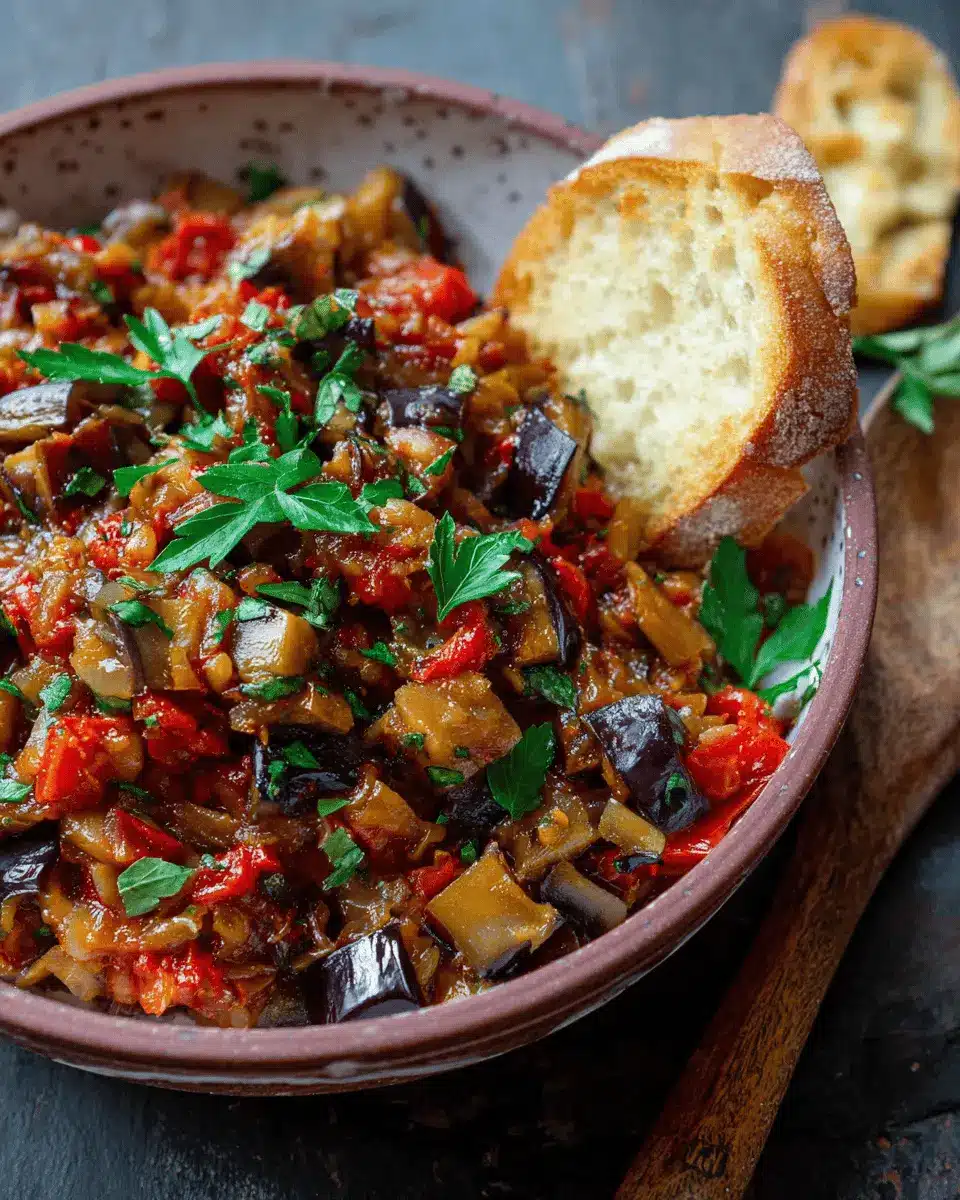
Serving Suggestions for Eggplant Caponata
Ideal Pairings and Presentation Ideas
When it comes to serving your eggplant caponata, the possibilities are exciting! For an elegant presentation, serve it in a lovely bowl with a drizzle of high-quality olive oil on top. Pair it with toasted Italian bread, such as ciabatta or baguette, to complement the dish’s rich flavors. You could also serve it alongside grilled meats or chicken for a heartier meal. Don't forget fresh herbs like parsley or mint for garnishing!
How to Enjoy Caponata as a Meal
If you’re looking for a light yet satisfying meal, consider serving your caponata over a bed of arugula or spinach. Add some grilled chicken breast or turkey bacon for protein, or even toss it with pasta for a flavorful main dish. Remember, this eggplant caponata recipe tastes even better the next day, making it perfect for meal prep or lunch!
Time Breakdown for Eggplant Caponata
Preparation time
Getting your ingredients prepped is a breeze—set aside 20 minutes for chopping, seasoning, and readying everything for cooking. This step is essential for infusing your eggplant caponata recipe with flavor, so don’t rush through it!
Cooking time
Once your ingredients are prepped, the cooking process will take around 45 minutes. This includes roasting the eggplant and simmering everything together for a delicious blend of flavors.
Total time
In total, you’re looking at about 65 minutes from start to finish. If you’re planning to serve this delightful dish at a gathering, consider making it a day ahead for the best taste, as the flavors truly deepen and meld together overnight. You can learn more about the benefits of making dishes ahead here.
With these time estimates in mind, you can easily fit this delectable eggplant caponata recipe into your day!
Nutritional Facts About Eggplant Caponata
Calories
A serving of eggplant caponata recipe contains approximately 91 calories, making it a light yet satisfying dish perfect for appetizers or salads.
Fiber Content
This savory medley is rich in dietary fiber, clocking in at about 4.7 grams per serving, which aids digestion and promotes a feeling of fullness.
Key Vitamins and Minerals
Caponata is not just delicious but also nutritious! It provides essential vitamins and minerals, including:
- Vitamin A: 955 IU
- Vitamin C: 34.7 mg
- Calcium: 35.3 mg
- Iron: 1.2 mg
Incorporating this dish into your meals can enhance your nutrient intake while enjoying its vibrant flavors. For more nutritional information, you can check out resources from Healthline or USDA FoodData Central.
FAQs about Eggplant Caponata
Can I substitute eggplant with another vegetable?
Absolutely! While eggplant is the star of this eggplant caponata recipe, you can get creative. Zucchini or yellow squash can be delicious alternatives. Keep in mind that the flavor and texture will differ, but the essence of caponata will shine through!
How long can I store leftover caponata?
Leftover caponata can be stored in an airtight container in the fridge for up to 5 days. It actually tastes even better the next day as the flavors meld together. Just remember to let it sit at room temperature for about 30 minutes before serving for the best flavor.
What’s the best way to serve caponata?
Caponata is incredibly versatile! Serve it as a delightful appetizer with toasted ciabatta or as a side alongside grilled chicken or fish. You could also toss it with pasta or serve it over a bed of greens for a refreshing salad. Pair it with a drizzle of balsamic reduction to elevate your dish further!
For more tips on serving suggestions, check out this article on Mediterranean appetizers.
Conclusion on Eggplant Caponata Recipe
In summary, this eggplant caponata recipe is a delightful way to celebrate Mediterranean flavors. Perfect as an appetizer or side dish, it enhances your meals with rich, savory notes. To elevate the experience, let it rest before serving, ensuring those flavors meld beautifully. Enjoy!
Eggplant Caponata Recipe
Equipment
- sheet pan
- Braising pan or large skillet
Ingredients
- 1 large eggplant cut into 1-inch cubes
- Kosher salt
- Extra virgin olive oil about 3 tablespoons
- 1 medium yellow onion chopped
- 1 medium red bell pepper cored and chopped
- 2 small celery stalks thinly sliced
- Black pepper
- 1 cup crushed tomatoes
- 2 tablespoon capers
- ¼ cup pitted green olives roughly chopped
- ¼ cup raisins
- 2 teaspoons honey more to your liking
- 1 piece bay leaf
- ¼ teaspoon crushed red pepper flakes to ½ tsp
- ¼ cup red wine vinegar
- ¼ cup dry white wine
- 2 tablespoon chopped fresh parsley
- 2 tablespoon chopped fresh mint
Instructions
- Heat the oven to 400 degrees F.
- Season the eggplant cubes with salt (if you have the time, set it aside in a colander to sweat out its bitterness for about 20 or 30 minutes, while you prepare the remaining ingredients. Pat dry with paper towel).
- Place the seasoned eggplant cubes on a sheet pan, add a generous drizzle of extra virgin olive oil (about 3 tablespoons or so) and toss to coat. Roast the eggplant in the heated oven for 25 to 30 minutes or until browned.
- Heat 2 tablespoons of extra virgin olive oil in a large skillet. Add the onions, bell pepper, and celery. Season with a pinch of kosher salt and black pepper. Cook for about 5 to 7 minutes, tossing regularly until softened.
- Add the tomatoes, capers, olives, raisins, honey, bay leaf and crushed pepper flakes. Pour in the vinegar and white wine. Stir to combine. Simmer on medium-low heat for 10 minutes.
- Stir in the roasted eggplant and cook for another 2 to 3 minutes in the sauce. Finish with fresh parsley and mint.



Leave a Reply